
-
-
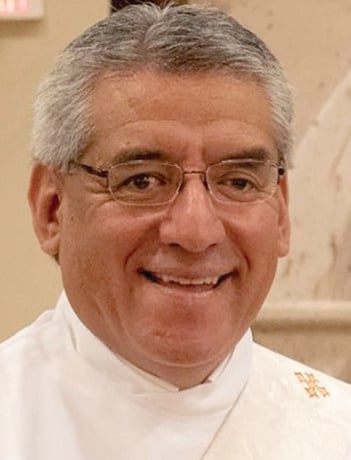
Deacon Luis Zuñiga
Director, San Juan Diego Ministry Institute
-
Wounded healers serving the ChurchI was in high school when I experienced my first flight on an airplane. During the flight, the stewardess instructed us that in case of cabin decompression, we were to place our oxygen mask first and then assist anyone traveling next to us with their mask.
I thought to myself, that is the dumbest thing I’ve ever heard. To place and adjust the oxygen mask and then help someone else. At the time I heard it, it didn’t make any sense to me.
As smart as I thought I was then, I thought that I would help the other first and then place the oxygen mask on my face. But that is not possible if you pass out. If you lose consciousness, how can you help anyone? In retrospect, the instructions the flight attendant gave made perfect sense.
In ministry, it is the same. If we are not well, how can we help others? How can we minister to the other when we ourselves are struggling? When we feel exhausted or burned out?
One of the books that was required reading when I was completing religious studies in the mid-’80s was by the title The Wounded Healer by Father Henri J. M. Nouwen, a Catholic priest and professor of psychology and spiritual theology, who published 39 books and yet struggled and suffered bouts of insecurity and depression.
This book has impacted my life in the many years in ministry: understanding the need to be honest in having authentic relationships, especially between myself and God and those we meet. Recognizing that our wounds in life can actually make us a better person and an effective minister serving the Church.
Father Henri Nouwen believed “Nobody escapes being wounded. We all are wounded people, whether physically, emotionally, mentally, or spiritually. The main question is not ‘How can we hide our wounds?’ so we don’t have to be embarrassed, but ‘How can we put our woundedness in the service of others?’ When our wounds cease to be a source of shame, and become a source of healing, we have become wounded healers.”
He also emphasized that “Jesus is God’s wounded healer: through his wounds we are healed. Jesus’ suffering and death brought joy and life. His humiliation brought glory; his rejection brought a community of love. As followers of Jesus, we can also allow our wounds to bring healing to others.”
The Gospel of Mark (2:17) tells us “Jesus said ‘Those who are well do not need a physician, but the sick do. I did not come to call the righteous but sinners.’” In order to heal we must forgive.
In reality we are all wounded; we are all sinners in need of God’s mercy. We are all broken, while we struggle to minister to others. The Lord Jesus helps us to recognize that our wounds can become a place where we and others encounter his healing power, especially in the Sacraments of Healing (Confession and Anointing).
In ministry, “we can’t offer to others what we ourselves don’t have,” and “we are not able to speak of that which we haven’t lived.” Father Nouwen said it best in these words: “Unless it comes from a heart wounded by the suffering about which we speak … ministry without a deeper understanding of the ways in which ministers can make their own wounds available as a source of healing.” (The Wounded Healer, page 4).
Let us reflect on the visible wounds of the risen Lord when he appeared to the Apostles and invited Thomas to place his finger on his side. It is a powerful reminder that Jesus’ glorious wounds remain even after the Resurrection. Why are the wounds still there?
Perhaps the wounds of the Pierced One, the Crucified One, the Risen One, remind us that sin, suffering, hatred, indifference, intolerance, racism and death are still part of the struggles of the world. We all carry the wounds of past hurts, unresolved conflicts with others, and the painful memories of those who have hurt us. However, they remind us most of all that God’s love is more powerful than death.
Jesus invites us like he invited Thomas to touch his pierced side in order that we may be healed and transform our wounds of painful sufferings into healing encounters of mercy. He wants to give us peace and grant us his grace in order that we may experience his healing power obtained for us by his suffering, death and resurrection.
I believe that healing (body and soul) begins when we acknowledge and tend to the wound. Following the example of the Good Samaritan in Luke’s gospel (10:25), we must have compassion for those hurting. Jesus the Divine Physician and the healer of our souls is the only one who can heal us and makes us whole again.
A couple of years ago I completed an online course (which I highly recommend) – “Healing the Whole Person” by Dr. Bob Schuchts, offered by the John Paul II Healing Center: Transformation in the Heart of the Church. It is the fruit of both his own personal healing journey and over 30 years as a marriage and family therapist. The course offers a journey to spiritual, physical and emotional wholeness, entering to hidden places of the heart, aware of our deep trauma, facing pains and our woundedness; but most of all experiencing a deeper encounter with the authentic healing love of our Lord Jesus Christ.
Today we hunger to hear that the risen Lord Jesus, the Christ, is the answer to the deepest aspirations of the human heart and wants to heal what ails our restless world.
-
-
-
-
For some time now I’ve asked those who visit for spiritual direction, “Are you happy?” Over the years some have said that they are content, but few have answered that they are truly happy. Many respond instead by telling me what makes them happy or who makes them happy.
Some who are parents have shared that what makes them happy are their children. And those who are now grandparents have said their grandchildren make them happy. Others say their spouse, or traveling the world, enjoying good food and friends makes them happy.
Young adults often tell me that they are still searching for happiness, while others say that their careers, success, fame, power and or their salary make them happy. For some, the car they drive or the home they have purchased makes them happy. I suppose that often we confuse happiness with what we have achieved or what makes us successful. Many have shared that their family or having good health makes them happy. Meanwhile, many who are involved in church and practice their faith have shared that having a relationship with God makes them happy.
As human beings, we are in a constant pursuit of happiness. Some questions come to mind: Who am I? What is the meaning and purpose of my life? (Existence.) Where did I come from? (Origin.) Where am I going in life or after I die? (Destiny.)
Why is it that we feel incomplete and restless? Could it be that nothing in this life - material possessions, wealth, experiences, or pleasure - satisfies us?
St. Augustine tells us, “You have made us for yourself, O Lord, and our hearts are restless until they rest in you.” Only God and him alone is our complete fulfillment of our yearning for happiness in this life.
The Catechism of the Catholic Church gives us an answer: “The desire for God is written in the human heart, because man is created by God and for God; and God never ceases to draw man to himself. Only in God will he find the truth and happiness he never stops searching for. The dignity of man rests above all on the fact that he is called to communion with God. This invitation to converse with God is addressed to man as soon as he comes into being. For if man exists it is because God has created him through love, and through love continues to hold him in existence.”(CCC 27).
How many of you remember the 1988 hit song, “Don’t Worry, Be Happy” by Bobby McFerrin? It reminds me that in this life, despite our difficulties, we want to be happy and we want to make others happy. St. Teresa of Jesus says, “Dream that the more you struggle, the more you prove the love that you bear your God, and the more you will rejoice one day with your Beloved, in a happiness and rapture that can never end.”
In his books, “The Four Levels of Happiness” and “Finding True Happiness: Satisfying Our Restless Hearts,” which I highly recommend, Father Robert Spitzer mentions Aristotle saying that happiness is the one thing you can choose for itself, everything else is chosen for the sake of happiness.If Aristotle is correct, this one concept, “happiness,” is at the root of every decision we make and action we perform, and therefore it determines whether we think our lives have meaning, whether we are going somewhere, whether we are successful, whether we are worth something (to ourselves) whether life is lived to the full, and even whether life is worth living. Inasmuch as this concept can influence our whole identity and purpose in life, it will probably influence the kind of friends we make, the person we want to marry, the career we pursue, the clubs to which we belong, the associations with which we affiliate and just about everything else of relevance.”
In the Gospel of John 10:10, Jesus says, “I have come that they may have life, and they may have it more abundantly.” Jesus comes as the Good Shepherd to give us eternal life; unlike the thief (Satan) who comes to destroy it. Jesus fills our lives with abundant joy, love and peace. Those who are led astray from him will experience a life lacking true fulfillment, an empty happiness. We may ask ourselves, am I Christ- like with others? Am I in a relationship with Jesus the Good Shepherd who protects me? In choosing Jesus as our Lord and Savior, we find that he alone will give meaning and purpose to our lives.
In praying with the saints, I’ve discovered that between happiness and sorrow, many of them chose sorrow, for their pain, grief and suffering is what made them remain faithfully close to God. Perhaps we can follow their example in our own pursuit of happiness.
-
-
-
Summer 2024
Some 30 years ago when I was director of religious education at a parish, I remember meeting a gentleman in the lobby of my eye doctor. I had a book, and he seemed curious about what I was reading – “The Wounded Healer: Ministry in Contemporary Society” by Father Henri Nouwen.
After he glanced my way a few times, I decided to say hello – my way of inviting him into a conversation. He asked if I was a pastor, a priest or deacon. I responded telling him how I was involved as a lay person working full time for my church.
He was inquisitive, and asked which church. When I told him the Catholic Church, he rolled his eyes and began to tell me why he was not a practicing Catholic anymore. I did my best to listen to him as he recounted his bad experiences with the Church. He told me how the deacon at the pre-baptismal classes had scolded everyone because he did not recognize anyone in the class at Mass on Sundays.
The man painfully described how his only son had committed suicide at 19 years old; how a woman from the church who came to pray the rosary at the wake service had told everyone present to pray for the soul of their son who had taken his life, and ask God to forgive him for this grave sin. The family was so grief-stricken at the time that no one could say anything. What they wanted to hear was that their son would be forgiven by God and welcomed into heaven.
As if that was not enough, he told me about how a priest in the same church had given his daughter a difficult time during their preparation for Holy Matrimony; how the priest was so condescending, rigid and legalistic about certain issues the couple had. Eventually the daughter and her fiancé, feeling very hurt, ended up at another church.
It was obvious that he was disappointed and deeply wounded by the Catholic Church. He looked at me with tears in his eyes and said that he had stopped attending Mass on Sundays. His wife would insist on him accompanying her, but he refused, even though he had been raised Catholic.
He eventually told me that he was convinced that the Church was full of hypocrites and wondered why God would allow hypocrites in the Church. I expressed to him my sadness and told him that I apologized for the way the Church had made him feel over so many years. I did my best to explain to him that the Church was the wounded Body of Christ in need of much healing.
I told him that the good thing about the Church was that there was always room for another hypocrite. Thank God he smiled! He said to me, “You know what – it’s true. I’m not perfect either. But I expected better from the Church.”
I told him that I too was a hypocrite and a sinner, and that the Church was made of both saints and sinners alike.
As a deacon, I am convinced that the Church is a hospital for wounded souls on their way to heaven. St. Augustine of Hippo said, “The church is not a hotel for saints; it is a hospital for sinners.”
Father Nouwen in “The Wounded Healer” writes, “The great illusion of leadership is to think that man can be led out of the desert by someone who has never been there. Our lives are filled with examples which tell us that leadership asks for understanding and that understanding requires sharing.”
He also added, “The beginning and the end of all Christian leadership is to give your life for others … Compassion is born when we discover in the center of our own existence not only that God is God and man is man, but also that our neighbor is really our fellow man.”
Everyone involved in some type of ministry in the Church is a wounded healer; none of us are perfect. We are all saints in the making, a work in progress. St. Luke tells us that Jesus said, “Those who are healthy do not need a physician, but the sick do. I have not come to call the righteous to repentance but sinners.” (Lk 5:31-32).
St. Paul reminds us in his letter to the Romans, “All have sinned and are deprived of the glory of God” (Rom 3:23). As Christians we realize that the sickness is sin and cure is Christ Jesus. The Risen glorified Lord appears to the Apostles and shows them his wounds, and by his wounds we are healed.
The Church is in need of much healing today, but the reality is that we cannot place a Band-Aid on a wound that needs stitches. We may all be on our way to heaven, but while we live on earth, we need to live as though we are worthy of heaven. After all, we are all sinners – beggars in need of God’s mercy.
“Christ always gives his Church the gift of unity, but the Church must always pray and work to maintain, reinforce, and perfect the unity that Christ wills for her.” (CCC #820).
-
-
-
Spring 2024
A good Oblate priest friend would always tell me, “Stay humble deacon, stay humble.” I would smile and say “I’ll try father, I’ll try”. It often reminded me of the saying by C.S. Lewis “True humility is not thinking less of yourself. It’s thinking of yourself less.”
In his letters St. Augustine said, “The way to Christ is first through humility, second through humility, third through humility” (118:22). Augustine also stated that, “It was pride that changed angels into devils; it is humility that makes men as angels.”
St. Thomas Aquinas defines it even better in saying: “Humility means seeing ourselves as God sees us: knowing every good we have comes from Him as pure gift” (Summa Q161). However; our own pride, more than anything, can tempt us to see ourselves through the world’s eyes and through the lens of the opinion of others, often seeking their approval.
Humility, after all, is the “mother of all virtue” and the foundation of holy living. Without humility, we are not able to obtain or even strive for holiness. If we want to see ourselves in the light of truth, we must humbly seek to see ourselves only as God sees us. That’s all that matters.
Reflecting on humility leads me to think about the pursuit of self-knowledge; a lifelong quest -often a painful one. I remember a theology professor mentioning that lack of self-knowledge can lead us to hurt others.
As we reflect on our lives and those whom we minister with, we realize that many of the issues we face and deal with are rooted in a lack of self-knowledge or “loss of a sense of self”.
In the story of creation in the Book of Genesis, we learn that God creates Adam and gives him everything. Adam acts selfishly, eventually distancing himself from God’s goodness by attempting to be like him. Adam blames Eve, who then blames the serpent for their disobedience. When we blame others for our own decisions, it is because we do not fully know ourselves. Our choices have consequences and blaming others we do so to avoid facing our true selves.
Our vocation as Christians calls us to self-knowledge, knowing ourselves can lead us, in turn to better understand how to relate well with others and with God, thus growing in our own spiritual life.
Created in the image and likeness of God, he knows us best. In the spiritual life we invite God into our own journey of self-awareness; otherwise, we may feel lost.
St. Augustine wrote: “Know thyself, and know thy faults and thus live.” In order to deepen our relationship with God and others, we need to be aware of our own sin and our own limitations. This can be painful at times, but God gives us the grace through his love and mercy.
Throughout the centuries many saints have discovered and echoed that self-knowledge is the key to an authentic relationship with God. In turn, realizing that to know God is directly related to knowing ourselves. St. Athanasius sums it up when he said, “No one can know God without knowing himself.”
I have often thought that in our daily living we all struggle, we are either running towards God or running away from him. The daily spiritual battle as a Christian is between good and evil.
A greater obstacle to true self-knowledge is that we are often focused on the faults of others, while minimizing our own. It’s always easier to see the faults and imperfections of others rather than to recognize our own.
As I was growing up, my mother would often say in Spanish, “Seeing only the faults of others is like bad breath; we can smell it on others, but not on ourselves.” We can have a false sense or view of who we are if we don’t look at ourselves in a mirror often.
In the different Schools of Catholic Spirituality, we learn that if we examine ourselves regularly, we can identify a particular sin or sins that give us the most trouble. Through self-awareness, we are able to see where we need to improve through prayer and discernment; seven capital sins (vices and virtues), the Ten Commandments and the Beatitudes.
The more united we are with the Lord Jesus in prayer, the closer we are able to see ourselves as we truly are. For Catholics prayer is essential for true self-knowledge, and yet another obstacle to seeing ourselves as we are might be that we have become somewhat complacent in our prayer.
In his book, The Power of Silence, Cardinal Robert Sarah writes, “From morning to evening, from evening to morning, silence no longer has any place at all; the noise tries to prevent God himself from speaking. In this hell of noise, man disintegrates and is lost; he is broken up into countless worries, fantasies, and fears. In order to get out of these depressing tunnels, he desperately awaits noise so that it will bring him a few consolations. Noise is a deceptive, addictive, and false tranquilizer. The tragedy of our world is never better summed up than in the fury of senseless noise that stubbornly hates silence. This age detests the things that silence brings us to: encounter, wonder, and kneeling before God.”
As we can see, if we do not know God, then we will never be able to fully grasp the knowledge of ourselves. Self-awareness, self-knowledge can lead us to truly give ourselves more freely to the service of God’s people and the Church with deeper commitment.
-
-
-
Winter 2024
Our Lady of Guadalupe told San Juan Diego, “Listen and understand, my littlest son, let nothing frighten and afflict you or trouble your heart. … Am I not here, I, who am your mother? Are you not under my shadow? Am I not your health? Are you not, by chance, held within my mantle? Is there anything else you need? Do not be disturbed by anxiety or pain, nor worry about anything else. Do not be afflicted by your uncle’s illness. He won’t die. Be sure he’s healed.”
On Dec. 9, 1531, Juan Diego Cuauhtlatoatzin was crossing the hill of Tepeyac when he heard heavenly music and a beautiful angelic voice calling out to him, “Juanito! Juan Dieguito!” Juan Diego more than likely was somewhat fearful when he approached the beautiful lady. Bright like the sun, she was dressed like an Aztec princess and spoke to him in his native tongue, Nahuatl. When she asked where he was going, he replied that he was going to Holy Mass in Tlatelolco.
The Blessed Mother made her request known to Juan Diego. “My dear little son, I love you. I desire you to know who I am. I am the ever-virgin Mary, Mother of the true God who gives life and maintains its existence. He created all things. He is in all places. He is Lord of Heaven and Earth. I desire a church in this place where your people may experience my compassion. All those who sincerely ask my help in their work and in their sorrows will know my Mother’s Heart in this place. Here I will see their tears; I will console them and they will be at peace. So run now to Tenochtitlán and tell the Bishop all that you have seen and heard.”
Bishop Fray Juan de Zumarraga at first refused even to see Juan Diego, then doubted him. Feeling unworthy, Juan Diego responded to Our Lady, “I therefore beg of you to send some noble and influential person, someone worthy of respect, to whom credit ought to be given. For you see, O my empress, I am a poor man, a mere lowly peasant, and I am not fit to be your ambassador. Pardon, O my Queen, if I have at all failed in the respect due to your greatness”
We all know how the story ends. The Queen of Heaven gave Juan Diego the sign that the bishop demanded. Juan Diego stood before the bishop, opened the tilma, and roses fell out. However, it wasn’t the flowers that caused the bishop and his advisers to fall on their knees. There on the tilma appeared the sacred image of the Blessed Virgin Mary, the Mother of God, pregnant with her divine Son, exactly as Juan Diego had described her. Her mestizo face expressed her spiritual motherhood, which would embrace all who would come to believe.
The words of Santa Maria de Guadalupe to San Juan Diego should give us hope today. In a world begging God for peace and also for unity in our Church, she reminds us not to be afraid, for we are not alone. Her image on the tilma is to remind us that she is here to intercede for us in our time of need.
In a world of indifference, St. Maximilian Kolbe reminds us, “The most deadly poison of our times is indifference. And this happens, although the praise of God should know no limits. Let us strive, therefore, to praise Him to the greatest extent of our powers.” Indifference hardens our hearts; it makes us less loving, forgiving and merciful, less human.
The lesson from San Juan Diego is that we must be willing to listen, with the intent to understand rather than with the intent to reply. And we must be willing to speak up, to be the voices our world and Church need to hear.
The Catechism of the Catholic Church states: “The duty of Christians to take part in the life of the Church impels them to act as witnesses of the Gospel and of the obligations that flow from it. This witness is a transmission of the faith in words and deeds. Witness is an act of justice that establishes the truth or makes it known. All Christians by the example of their lives and the witness of their word, wherever they live, have an obligation to manifest the new man which they have put on in Baptism and to reveal the power of the Holy Spirit by whom they were strengthened at Confirmation.” (CCC #2472).
The mission given to San Juan Diego by Our Lady of Guadalupe continues, for “we are all Juan Diegos” – missionary disciples. To bring everyone to her Son, Our Lord Jesus Christ, to knock on the doors of the hearts of all who are hurting and to give testimony of our beautiful – like the roses that fell from the tilma – Catholic faith to unbelievers.
La Virgen del Tepeyac, la Virgen Morena; nos recuerda que “todos somos Juan Diego”.
-
-
-
Fall 2023
In the Lord’s prayer (Mt 6:9-13), we pray, “Thy will be done on earth as it is in heaven.” Have you ever asked yourself what it means to do God’s will? What is the will of God?
“The Catechism of the Catholic Church” explains: “He has made known to us the mystery of his will, according to his good pleasure that he set forth in Christ ... to gather up all things in him, things in heaven and things on earth. In Christ we have also obtained an inheritance, having been destined according to the purpose of him who accomplishes all things according to his counsel and will.” We ask insistently for this loving plan to be fully realized on earth as it is already in heaven. (#2823).
The Lord’s Prayer indeed is “a summary of the entire gospel” in which the Lord Jesus teaches the Apostles and us that only in doing the Father’s will we find our ultimate happiness. God alone is of course the infinite good and the only possible source of everlasting happiness. That’s why the will of God should be the only goal of our happiness.
Happiness can only come from a personal relationship with someone, and that someone is God the Father who is infinitely good, and who in his goodness (love) desires to give Himself to us and equally desires the gift of our love. “For God so loved the world that he gave his only Son, so that everyone who believes in him might not perish but might have eternal life” (Jn 3:16).
Happiness can only be found in a complete communion of hearts, a union of wills, since the will of God is the only source of all goodness. In his creation and therefore in us, we can only be ultimately happy when we find our way back into that source of eternal goodness. This we must do by uniting our will to his.
St. Paul’s letter to the Ephesians reminds us that when we surrender ourselves to God’s will, we commit ourselves to live conformed, in union with Christ Jesus in order that his will lives in us: “For this reason I kneel before the Father, from whom every family in heaven and on earth is named, that he may grant you in accord with the riches of his glory to be strengthened with power through his Spirit in the inner self, and that Christ may dwell in your hearts through faith; that you, rooted and grounded in love, may have strength to comprehend with all the holy ones what is the breadth and length and height and depth, and to know the love of Christ that surpasses knowledge, so that you may be filled with all the fullness of God” (3:14-19).
There are seven petitions to the Father in the Lord’s Prayer. In these petitions, we find the longing of every human searching for God and every expression of faith found in the Sacred Scriptures. As Catholics, we believe that everything we need to know about the Christian life and how to pray are contained in the Lord’s Prayer.
“After we have placed ourselves in the presence of God our Father to adore and to love and to bless him, the Spirit of adoption stirs up in our hearts seven petitions, seven blessings. The first three, more theological, draw us toward the glory of the Father; the last four, as ways toward him, commend our wretchedness to his grace. "Deep calls to deep” (Ps 42:7). (Catechism of the Catholic Church #2803).
Every day, we struggle like the saints before us to do God’s will or to do our will. Our freedom of choice is given to us by our loving Creator, but we decide whom we will serve – God or ourselves. Only one choice leads to eternal happiness.
As we pray “thy will be done,” we are asking God to fill us with the knowledge of his will. May the Holy Spirit give us the courage and strength necessary to then live out that will and enable us to understand what God reveals as his divine plan for our lives.
-
-
-
Summer 2023
We live in a broken and shattered world desperately in need of God’s healing. Watching the evening news can be depressing. It’s easy to lose hope in a world that is full of intolerance, indifference, injustice, double standards and hypocrisy.
Today, whether it is corporate America, education, government, healthcare or the Church, it seems like leaders are under much scrutiny as their leadership, integrity and whether they truly lead by example are being questioned.
To whom shall we go? Our Catholic faith teaches us that the world needs Jesus. Only the Lord Jesus can heal our broken and fragmented world. Without Christ we are miserable.
St. Paul reminds the Corinthians, “If only for this life we have hope in Christ, we are of all people most to be (miserable) pitied. But Christ has indeed been raised from the dead, the first fruits of those who have fallen asleep. For since death came through a man, the resurrection of the dead comes also through a man.” (1 Corinthians 15:19-21).
St. Paul makes clear that “indeed Christ has been raised from the dead,” and that Jesus alone is our only hope.
The bishops of the United States have launched the National Eucharistic Revival, a three-year initiative in this country that aims to inspire, educate and unite. The goal of the revival foremost seeks to inspire Catholics to encounter (or re-encounter) the Lord Jesus in the Eucharist.
In response to a 2019 Pew Research Center survey, which indicated that only 31 percent of Catholics believe in the Real Presence of Christ in the Eucharist, the national initiative invites and encourages practicing Catholics to evangelize and catechize those struggling with their faith in the Real Presence of Our Lord Jesus Christ in the Eucharist.
The National Eucharistic Revival explains on its website: “Our world is hurting. We all need healing, yet many of us are separated from the very source of our strength. Jesus Christ invites us to return to the source and summit of our faith in the celebration of the Eucharist. The National Eucharistic Revival is a movement to restore understanding and devotion to this great mystery by helping us renew our worship of Jesus Christ in the Eucharist.”
In a world where not many people know Jesus intimately, the revival is meant to remind us of how the True Presence of Jesus can transform us and heal our souls.
How does the Eucharist heal us? The healing known in the Eucharist is one that Christ grants through his power and our faith. Christ is the Divine Doctor and the Healer of our souls; he alone can restore us and the whole world to good health.
“When Jesus came down from the mountain, great crowds followed him.
“And then a leper approached, did him homage, and said, ‘Lord, if you wish, you can make me clean.’ He stretched out his hand, touched him, and said, ‘I will do it. Be made clean.’ His leprosy was cleansed immediately.” (Mt 8:2–3).
As we get ready to begin the Year of Parish Revival (June 11, 2023-July 17, 2024), the second phase of the national revival aims to foster Eucharistic devotion at the parish level, strengthening our liturgical life through faithful celebration of Holy Mass, Eucharistic Adoration, missions, resources, preaching, and organic movements of the Holy Spirit.
In the midst of so much human misery in our hurting world today, allow me to share the prayer of St. Pio of Pietrelcina, “Stay with me, Lord” – a prayer for after-Communion. May it reassure us of the Eucharistic Lord’s Presence in our lives, and sustain us in faith to persevere in times of doubt.
“Stay with me, Lord, because I am weak and I need Your strength, that I may not fall so often.
“Stay with me, Lord, for You are my life, and without You, I am without meaning and hope. Stay with me, Lord, for You are my light, and without You, I am in darkness.Stay with me, Lord, to show me Your will.
“Stay with me, Lord, so that I can hear Your voice and follow you. Stay with me, Lord, for I desire to love You ever more, and to be always in Your company.
“Stay with me, Lord, if You wish me to be always faithful to You. Stay with me, Lord, for as poor as my soul is, I wish it to be a place of consolation for You, a dwelling of Your love.
“Stay with me, Jesus, for it is getting late; the days are coming to a close and life is passing. Death, judgement and eternity are drawing near. It is necessary to renew my strength, so that I will not stop along the way, for that I need You. It is getting late and death approaches. I fear the darkness, the temptations, the dryness, the cross, the sorrows.
“O how I need you, my Jesus, in this night of exile! Stay with me, Jesus, because in the darkness of life, with all its dangers, I need You. Help me to recognize You as Your disciples did at the Breaking of the Bread, so that the Eucharist Communion be the light which disperses darkness, the power which sustains me, the unique joy of my heart.
“Stay with me, Lord, because at the hour of my death I want to be one with You, and if not by Communion, at least by Your grace and love.
“Stay with me, Jesus, I do not ask for divine consolations because I do not deserve them, but I only ask for the gift of Your Presence. Oh yes! I ask this of You. Stay with me, Lord, for I seek You alone, Your Love, Your Grace, Your Will, Your Heart, Your Spirit, because I love You and I ask for no other reward but to love You more and more, with a strong active love. Grant that I may love You with all my heart while on earth, so that I can continue to love you perfectly throughout all eternity, dear Jesus. Amen.”
-
-
-
Spring 2023
At some point in our lives, we all question our existence. What is the meaning and purpose of life? Why am I here? Who am I? These are perhaps questions we all have asked. Each one of us at some stage in our lives looks for true meaning and purpose.
Is the real purpose and meaning of life to be successful and to make a lot of money? Is it to marry and raise a family and have many children? Is it to obtain and accumulate an abundance of material possessions – like a nice car, a house, a boat, a motorcycle; or to obtain many degrees, travel the world, etc? Is it to have many friends, or is it to be well-known or popular on Facebook or Instagram and get many likes, or to be well recognized and become an influencer on Youtube?
But is this all there is to life? We live and then we die? Is there a no greater meaning or purpose to this awesome gift of life? Even if most of the time, all these things don’t quite fulfill our lives. Why? Because there is something very deep within us that says there is more to life, that there is something greater and meaningful that we are here on earth for. However, what is that purpose then?
In the Gospel of John, the Lord Jesus says: “I have come that they may have life, and have it to the full.” (10:10) and in the Catechism of the Catholic Church we read: “God put us in the world to know, to love, and to serve him, and so to come to paradise.” (1721).
There’s a story I remember hearing many years ago from the great master storyteller Megan McKenna about God wanting to hide from his creation. God gathers four of the wisest angels in heaven and asks them where he could hide. After a long silence, the first one says, “You can hide in the moon, they will never look for you there.” God answers, “No, one day man will reach and land on the moon.”
The second angel advises God by telling him, “You can hide under a rock in the deep bottom of the ocean. They will never look for you there. God replies, “One day man will build a submarine and reach the depths of the ocean.” The third angel, convinced he has the answer, tells God to hide in the tallest mountain on earth, and says, “They will never look for you there.” God sees the future and tells the angel that no, man is determined and will reach the tallest mountain on earth.
Finally the fourth angel very seriously tells God: “You can hide in the hearts of men and women; they will never look for you there.”
There is a different version of this story “God in Hiding” in the book by Margaret Silf titled “One Hundred Wisdom Stories.”
The “Catechism of the Catholic Church” clearly reminds us, “The desire for God is written in the human heart, because man is created by God and for God; and God never ceases to draw man to himself. Only in God will he find the truth and happiness he never stops searching for.”
The dignity of man rests above all on the fact that he is called to communion with God. This invitation to converse with God is addressed to man as soon as he comes into being. For if man exists it is because God has created him through love, and through love continues to hold him in existence. He cannot live fully according to truth unless he freely acknowledges that love and entrusts himself to his creator.” (CCC#27).
I always remember the way one of my theology professors, an aged and wise priest, started a summer class by asking, “If Jesus is the answer, what is your question?” Christ is the answer to all of our questions, particularly the deepest questions of human existence. Only Jesus can give our lives meaning and purpose.
As Catholics, we ultimately believe that we were created in the imago Dei (the image of God) and that the purpose of human existence is precisely to know and love God in this world and to be with him forever in the next.
In the spiritual life, the question is not what is the purpose of my life? but rather what is God’s purpose for my life? Only in faith are we able to answer like the many saints before us who struggled to know God’s will for their lives.
The Venerable Archbishop Fulton Sheen put it well when he wrote, “For when the curtain goes down on the last day, and we respond to the curtain call of judgment, we will not be asked what part we played, but how well we played the part that was assigned to us.”
-
-
-
Winter 2023
One day while I was eating lunch at the Subway at the bus station in downtown Brownsville, an older man approached and asked if he could sit with me. I was alone, so I quickly welcomed him to my table. I asked him if he wanted something to eat, and he responded graciously by saying that he had money. We talked for a while and he began to tell me about his life, and that he lived in a small rented apartment close to downtown. His name was Pascual.
He said his wife had passed away some years ago, and now his only son and daughter had pretty much forgotten about him. He said that what he feared most was dying alone, and that was the reason why he would go out daily into the streets and sit at the bus station – often just to find refuge from the heat. His hope, he said, was that if he died in the street, at least someone would notice. While feeling sad, I did my best to listen and comfort him.
When we said goodbye, I asked him why he chose to sit with me. He replied with a smile that I seemed like a kind person. Humbled by the experience, I returned to the chancery and went upstairs to the chapel. I prayed for him in front of the Blessed Sacrament and told the Lord Jesus that I knew it was him whom I had met at the bus station.
I was reminded of what the late Msgr. Pat Doherty, the first pastor I worked for in 1985, would often say: “What is the use of spending so much time in front of the Blessed Sacrament if you don’t recognize the Lord Jesus present in your brother or sister?”
For some years now, every other week I stop and eat at this Subway, which is a short distance from the Chancery. My favorite sandwich is the tuna with cucumbers, purple onion and jalapeños. The bus station is right across the street from the Immaculate Conception Cathedral, where I am one of the deacons, serving with the Oblate Fathers of Mary Immaculate.
Downtown Brownsville is always active and buzzing with people. Next to the bus station and the cathedral is a huge plasma center. People line up early in the morning and wait in line for long hours. Both the bus station and the cathedral are a block away from Gateway International Bridge.
When you arrive at the bus station, no matter what time, it is always full of people. As they sit there waiting, I often wonder about where they are from and what their destination might be. Often there is excitement when one travels somewhere, but here you can sense worry and fear in the many reluctant faces.
Among other people I’ve encountered was a young lady, 19 years old and six weeks pregnant, by the name of Janie. She was traveling to the interior of Mexico to live with her only aunt. Her parents were no longer speaking to her, and the boyfriend was pressuring her to have an abortion. She looked lonely, devastated and frightened.
On another occasion, a brother and sister, both released by Customs and Border Patrol and on their way to Indiana to live with relatives, told me their story of leaving El Salvador after their mom and dad were killed. The young woman also told me the horrifying episode of being raped during the journey. I couldn’t help it but cry with her, and then I prayed with them both while questioning how it is that some people can be so evil.
Another lady named Panchita told me that she loved to hear the cathedral bells at noon every day. While making the sign of the cross and with tears in her eyes, she said, “It’s like heaven is imploring and God is reminding us that we are not alone, and he is here with us.”
In downtown Brownsville – I imagine it’s the same in downtown McAllen or any major city – it is extremely difficult to ignore those marginalized by society. As Catholics, it is also difficult to ignore the Gospel message of seeing Christ more fully in everyone and loving them the same way God loves us. After all, we are all brothers and sisters, created in his own image and likeness.
The Gospel of Matthew clearly reminds us: “And the king will say to them in reply, ‘Amen, I say to you, whatever you did for one of these least brothers of mine, you did for me.’” (25:40)
The strange thing is that when I’ve gone back to Subway, I’ve looked for Don Pascual and can’t seem to find him. I often wonder if he is still alive, or if he’s gone home to be with his wife and is no longer lonely walking the streets.
There is a saying from St. John Chrysostom that says, “If you cannot find Christ in the beggar at the church door, you will not find Him in the chalice.”
I absolutely have no doubt you will always find the Lord Jesus in the Blessed Sacrament at the altar. However, I invite you to come and meet him in downtown Brownsville, at the bus station or outside the cathedral.
-
-
-
Fall 2022
Growing up my Mom Cuca during holy week would always have us watch the 1955 (black & white) movie Marcelino: Pan y Vino in the Spanish TV channel. I remember my brothers and I being captivated by what happened to Marcelino.
The movie is about Marcelino, a young orphan boy about eight years old who lives in a monastery in Spain. Marcelino is instructed strictly by the monks never to go up the stairwell of the monastery. But Marcelino disobeys and goes upstairs anyway, out of curiosity to see what is there. To his amazement, he finds a large crucifix in the attic. At first he’s afraid, but after many visits he begins to talk to Jesus on the cross.
One day he places bread and wine on a chair next to the crucifix, and miraculously, the Lord Jesus comes down from the cross and begins to eat and drink. Marcelino is completely astonished. Sitting next to him, Jesus talks to Marcelino, tells him he is a good, kind boy, and lets Marcelino know he can have one wish. Marcelino tells him that he wishes to see Jesus' mother, the Blessed Virgin Mary, and his own mother.
In one of the most powerful moments of the movie, Marcelino asks the Lord Jesus, “What do mothers do?” and Our Lord responds, “They love, they always love.” Jesus tells Marcelino that he has to fall asleep in order to get his wish. Marcelino falls asleep in the arms of Jesus, after which he has a vision of Our Lady and his own mother, eventually reuniting with them both.
The monks look for Marcelino and find him next to the cross. They realize that Jesus had actually come down to talk with the boy and now has taken him to heaven. They kneel down to pray and believe that what happened was a true miracle. Jesus gave the boy the name “Marcelino Pan y Vino” — “Bread and Wine.”
Every time I watch this movie, it brings me to tears. It reminds me of that mystical moment of receiving Holy Eucharist for the very first time. The message of the movie is indeed profound; Marcelino teaches us many lessons: that to believe in Jesus, we need to talk to him and visit him often, and that Jesus is the only one that can grant us eternal life. If only we but believe with the innocence and humility of Marcelino.
For the next three years, the bishops of the United States have initiated a National Eucharistic Revival, recognizing that our world is hurting and that we all need healing due to our separation from the very source of our strength. The Lord Jesus invites us to return to the source and summit of our faith: his Real Presence in the most holy Eucharist. The goal is to restore our understanding and devotion to such great mystery and how we can respond to the gift of the Eucharist by the way we live. (www.eucharisticrevival.org)
The United States Conference of Catholic Bishops have also published “The Mystery of the Eucharist in the Life of the Church” (available online). In this 33 page document they outline the Gift of the Eucharist, Our Response to the Gift and how we are Sent Forth. (Committee on Doctrine, USCCB 2021).
“As Christians we know that we need Christ to be present in our lives. He is our very sustenance as he reminded us: “unless you eat the flesh of the Son of Man and drink his blood, you do not have life within you’ (Jn 6:53). (The Mystery of the Eucharist in the Life of the Church, 4)
Perhaps some questions we can ponder this first year of the Eucharistic Revival may be: How often do I visit the Lord Jesus in the Blessed Sacrament? How often do I receive His precious Body and Blood? How often do I recognize him in my brothers and sisters during our everyday struggles?
We need to tell others of our own encounters with the Eucharistic Lord, like the disciples did on the road to Emmaus: “The two recounted what had taken place on the way and how he was made known to them in the breaking of the bread. (Gospel of Luke 24:35).
As I prepare to receive Holy Communion at Mass the words; “forgive me, heal me, save me” always come to mind. I think they express my deep desire for the Eucharistic Lord to have mercy on me an unworthy creature in need of Him.
“Lord Jesus Christ, pierce my soul with your love so that I may always long for you alone, who are the bread of angels and the fulfilment of the soul’s deepest desires. May my heart always hunger for you, so that my soul may be filled with the sweetness of your presence.” — St. Bonaventure
-
-
-
Ever since I can remember, I’ve always had a desire to help and to serve in the Church. It is something that my brothers and I were taught by my mother Cuca. She would remind us that no matter what we were, to always be respectful and kind to others. The many years I served at Holy Mass as an altar boy, I often felt that I wasn’t worthy, even to this day.
When vesting for Holy Mass, we were taught prayers. Even today as deacon, I am mindful of the commitment of the call to serve when placing the stole over my shoulders, symbolic of the towel that Jesus tied around his waist during the washing of the feet at the Last Supper.
I don’t remember the exact prayer from my days as a server, but it was similar to the prayer of St. Ambrose before Mass: “Lord Jesus Christ, we approach your banquet table as saints and sinners, and dare not rely on our own worth, but only on your goodness and mercy. Gracious God of majesty and awe, we seek your protection, we look for your healing. We appeal to you, the Fountain of all mercy.
“Lord Jesus Christ, Eternal King, crucified for us, look upon us with mercy and hear our prayer, for we trust in you. Merciful Father, purify us in body and soul, and make us worthy to taste the Holy of Holies. May your Body and Blood, which we intend to receive, unworthy as we are, be for us the remission of our sins, the washing away of our guilt, the end of our evil thoughts, and the rebirth of our better instincts. May it incite us to do the works pleasing to you and profitable to our health in body and soul, and may it deliver us from evil. Amen.”
Feeling unworthy is what perhaps many in ministry and service struggle with; we approach the banquet of heaven and earth as sinners and saints trusting in God’s mercy. For in the end, we are all beggars in need of God’s mercy.
Ministry means that we are called to serve with humility as we answer God’s call in faith. True ministry is about whom we are serving and never about us; therefore, the focus should never be on us (especially in liturgy). Ministry is not self-seeking and always involves collaborating with others. Serving with humility means imitating the Lord Jesus who came humbly to serve and not to be served.
After all: Who is more helpless than a newborn child? Who died nailed, naked and humiliated on the Cross? The Lord Jesus did not hesitate to share in our humanity; his birth was the first manifestation of his humility, a self-emptying which he freely and totally embraced for our sake (salvation), and for the forgiveness of our sins.
St. Paul reminds the Philippians and us, “Have among yourselves the same attitude that is also yours in Christ Jesus, who, though he was in the form of God, did not regard equality with God something to be grasped. Rather, he emptied himself, taking the form of a slave, coming in human likeness; and found human in appearance, he humbled himself, becoming obedient to death, even death on a cross.” (2:5-7).
Sir James Young Simpson (Scottish obstetrician) was once asked during a lecture at the University of Edinburgh what he considered to be the most valuable discovery of his lifetime. To the surprise of his students, he replied, “My most valuable discovery was when I discovered myself a sinner and that Jesus Christ was my Savior.” Everyone had expected for him to answer otherwise, since Dr. Simpson had discovered in 1853 that when chloroform was used during surgery, patients would feel no pain.
St. Catherine of Siena (Doctor of the Church) is known for saying that “God is He who IS; I am she who is not.” In her own words, she admitted that she owed her very existence to God’s good will. Humility is the virtue that keeps us honest about ourselves, who we are, and who God is, because humility requires an awful lot of honest self-awareness (true self-knowledge).
The Blessed Virgin Mary is our prime example for Christians seeking humility. She submitted with a humble heart. “May it be done unto me according to your word.” (Luke 1:38). Her fiat (“Let it be done”) was a total acceptance and consent to the will of God in her life. Her faith in saying yes should inspire us to completely abandon ourselves to the will of God in total humility.
Regardless of the title we may have, the authority, the position in life or in ministry, when we don’t respect others, when we seek recognition, power, the praise of others and even a following on social media, we may give the impression that our humility is false.
The lives of the saints remind us of the daily struggle; that pride is the downfall of human beings (as fallen creatures) and that humility is perhaps a difficult virtue to embrace and at times impossible to achieve. Despite their sinful limitations, the saints strived for holiness and discovered that humility indeed requires us to turn to and rely on God instead of other things and to trust in him alone. We are called to do the same.
-
-
-
At the beginning of his ministry, the Lord Jesus called forth the apostles and disciples to lead others and to live out the message of God's love, mercy, forgiveness and salvation. As a people marked by mission, the apostles went out and brought about the good news (salvation) of Jesus to the world. “The joy of the Gospel fills the hearts and lives of all who encounter Jesus. Those who accept his offer of salvation are set free from sin, sorrow, inner emptiness and loneliness. With Christ joy is constantly born anew.” (Evangelii Gaudium, #1).
In the Gospels, Jesus calls the apostles, “Come after me, and I will make you fishers of men.” Then they abandoned their nets and followed him. (Mk 1:17,18). He reminds them of the Conditions of Discipleship. “Whoever wishes to come after me must deny himself, take up his cross, and follow me. For whoever wishes to save his life will lose it, but whoever loses his life for my sake will find it." (Mt 16:24).
The call to build up the Kingdom of God in the world is exemplified best by the Parable of the Vineyard Laborers told by the Lord Jesus in the Gospel of Matthew (20:1-16). The owner of the vineyard goes out at daybreak to hire workers for his vineyard and he promises them just pay (one denarius for a day’s work). But realizing the work will not be completed by day’s end, he goes out again at the sixth hour, then again at the ninth hour and finally at the eleventh hour with the pointed question, "Why have you been standing here idle all day?"
Thus the owner challenges the workers and then invites more to join in: "You, too, go into the vineyard." In reality, the parable emphasizes that there is a place for all of God's people in the vineyard, which is the Kingdom of God in the world.
Today, in particular the laity (non-ordained) in collaboration with the ordained clergy (bishops, priests, deacons) are called by the Lord, the owner of the vineyard, to go out to the world and labor, not to waste time and sit idle. Jesus reminds us in the parable of God’s generosity in that the workers hired late received the same pay as those who started working early in the day.
There is plenty of work to be done in the vineyard of the Church as the laity assume their active role fulfilling their vocation and participating in the mission and the life of the Catholic Church.
The Second Vatican Council Fathers' call The Apostolate of the Laity “a sharing in the salvific mission of the Church.” Through their baptism and confirmation, all are appointed by the Lord himself to participate in this mission (see Lumen Gentium, 33). All Catholics are called to a greater participation in the mission of the Church. All the more reason that we make every effort to provide adequate formation of the laity so that they are better prepared to offer their gifts in the service of the Church.
The three-year Lay Ministry Formation Program offered by the Diocese of Brownville through the San Juan Diego Ministry Institute is designed to prepare individuals for roles of service in their respective parishes and help them enhance and expand their pastoral skills and knowledge of the faith. “The fundamental objective of the formation of the lay faithful is an ever-clearer discovery of one's vocation and the ever-greater willingness to live so as to fulfill one's mission.” (Christifideles Laici, 58).”
The document Co-Workers in the Vineyard of the Lord: A Resource for Guiding the Development of Lay Ecclesial Ministry published in 2005 and revised in 2015 by United States Conference of Catholic Bishops defines what lay ecclesial ministry is.
The term lay ecclesial ministry reflects certain key realities. Lay ecclesial ministry is lay because it is service done by lay persons. The sacramental basis is the sacraments of Initiation, not the sacrament of ordination; ecclesial because it has a place within the community of the Church, whose communion and mission it serves, and because it is submitted to the discernment, authorization, and supervision of the hierarchy; and ministry because it is the work by which Christians participate in the threefold ministry of Christ, who is priest, prophet, and king and continue his mission and ministry in the world. (Co-Workers in the Vineyard of the Lord, 10-11).
Following the Second Vatican Council, more of the laity began to step forward understanding more fully that they are called and gifted for the lay apostolate sharing in Christ’s priesthood through the sacrament of baptism.
As we continue to enhance the calling and acknowledge the presence of laity it will be a matter of nurturing, equipping and integrating their dedication and service into the life of the Church.
May we affirm and recognize our lay ecclesial ministers and give thanks and praise to the Father of Our Lord Jesus Christ for the tremendous blessing and gift they are to the Church.
-
-
-
As we begin another year, we ask the Lord to continue to bless us throughout all our days with peace and love. The liturgical year during this time recalls the Magi looking for Jesus a reminder for us as well to look for Jesus every day in the hope that when we find him we follow him faithfully.
In the Book of Numbers, the Lord said to Moses: “Speak to Aaron and his sons and tell them: This is how you shall bless the Israelites. Say to them: The LORD bless you and keep you! The LORD let his face shine upon you, and be gracious to you! The LORD look upon you kindly and give you peace! So shall they invoke my name upon the Israelites, and I will bless them.” (6:22-27).
Invoking God’s name and blessing his chosen people the Israelites, Moses is clearly instructed how Aaron and his sons are to bring peace to them by blessing them. Jesus came to fulfill the promise of God, that a Savior would come to bring peace and to save us all.
The New American Bible commentary on Verse 26 of Chapter 6 of Numbers mentions “Peace: the Hebrew word Shalom includes the idea of happiness, good health, prosperity, friendship, and general well-being. To use this term as a greeting was to pray for all these things upon the one greeted.”
God wants to continue to bless us, to protect us, to enlighten us so that he can love us and give us peace in his Son Christ Jesus.
For Catholics, blessings are called “sacramentals” because they prepare us to receive the grace of the sacraments and help us to grow to be more like Christ. Among sacramental, blessings of persons, meals, objects, and places come first. Every blessing praises God and prays for his gifts. In Christ, Christians are blessed by God the Father “with every spiritual blessing.” This is why the Church imparts blessings by invoking the name of Jesus, usually while making the Sign of the Cross of Christ.) Catechism of the Catholic Church, #1671.
St. Paul in his Letter to the Ephesians reminds us of the greatest blessing we have received: “Blessed be the God and Father of our Lord Jesus Christ, who has blessed us in Christ with every spiritual blessing in the heavens, as he chose us in him, before the foundation of the world, to be holy and without blemish before him. In love he destined us for adoption to himself through Jesus Christ, in accord with the favor of his will, for the praise of the glory of his grace that he granted us in the beloved.” (6:3-6).
As we begin another year in spite of the pandemic we have experienced the last two years, may we seek every day of the year God’s blessing upon us and all of our loved ones. Perhaps we can think of how much God has blessed us by the many people that are and have been a blessing in our lives and how we can be a blessing to others.
There’s a prayer by St. Padre Pio which he prayed after receiving Holy Communion that I find encouraging for us to pray daily: “Stay with me, Lord, because I am weak and I need Your strength, that I may not fall so often. Stay with me, Lord, for You are my life, and without You, I am without meaning and hope.
“Stay with me, Lord, for You are my light, and without You, I am in darkness. Stay with me, Lord, to show me Your will. Stay with me, Lord, so that I can hear Your voice and follow you. Stay with me, Lord, for I desire to love You ever more, and to be always in Your company. Stay with me, Lord, if You wish me to be always faithful to You. Stay with me, Lord, for as poor as my soul is, I wish it to be a place of consolation for You, a dwelling of Your love.
“Stay with me, Jesus, for it is getting late; the days are coming to a close and life is passing. Death, judgment and eternity are drawing near. It is necessary to renew my strength, so that I will not stop along the way, for that I need You. It is getting late and death approaches. I fear the darkness, the temptations, the dryness, the cross, the sorrows. O how I need you, my Jesus, in this night of exile! Stay with me, Jesus, because in the darkness of life, with all its dangers, I need You. Help me to recognize You as Your disciples did at the Breaking of the Bread, so that the Eucharist Communion be the light which disperses darkness, the power which sustains me, the unique joy of my heart.
“Stay with me, Lord, because at the hour of my death I want to be one with You, and if not by Communion, at least by Your grace and love. Stay with me, Jesus, I do not ask for divine consolations because I do not deserve them, but I only ask for the gift of Your Presence. Oh yes! I ask this of You. Stay with me, Lord, for I seek You alone, Your Love, Your Grace, Your Will, Your Heart, Your Spirit, because I love You and I ask for no other reward but to love You more and more, with a strong active love. Grant that I may love You with all my heart while on earth, so that I can continue to love you perfectly throughout all eternity, dear Jesus.”
-
-
-
“¿Otra vez frijoles?” I said to my mother when she served us lunch one day. I was about 8 years old. I remember her reminding us to always be grateful to God for what we had to eat. Even if it was frijoles.
Since then, fideo con pollo and beans on top became my favorite dish, even today. I recall that some years ago my brother Father Carlos took me to a local restaurant that had a delicious Mexican buffet. He wanted me to try their fideo con pollo, which to my surprise was prepared exactly the way our mother Cuca would make it – with beans on top. As I ate, nostalgia brought tears to my eyes; it reminded me of my mother (she passed to eternal life in 2004) and how much she loved us growing up – always making sure we had a good meal every day.
As Catholics, perhaps we don’t fully appreciate the gift that God has given to us in the sacrament of the Holy Eucharist. Maybe we have become too complacent and have taken it too much for granted (like our health, our family, our friends). For some Catholics, it is a sacrament that they don’t fully understand, or struggle to understand – the True Presence of Jesus (body, blood, soul and divinity).
The Catechism of the Catholic Church makes it clear that Christ comes to us in a most intimate and tangible way each time we partake of Holy Communion: “‘Christ Jesus, who died, yes, who was raised from the dead, who is at the right hand of God, who indeed intercedes for us,’ is present in many ways to his Church … most especially in the Eucharistic species. (CCC #1373)
“In the most blessed sacrament of the Eucharist ‘the body and blood, together with the soul and divinity, of our Lord Jesus Christ and, therefore, the whole Christ is truly, really, and substantially contained.’ ‘This presence is called ‘real’… it is presence in the fullest sense: that is to say, it is a substantial presence by which Christ, God and man, makes himself wholly and entirely present.’ (CCC #1374)
“It is by the conversion of the bread and wine into Christ’s body and blood that Christ becomes present in this sacrament. The Church Fathers strongly affirmed the faith of the Church in the efficacy of the Word of Christ and of the action of the Holy Spirit to bring about this conversion.
Thinking of my mother feeding us with love every day as I was growing up reminds me that as Catholics, we need to be deeply grateful and truly appreciate God for giving us Jesus, first in the manger, then on the Cross, and every day in the Eucharist. God who is the source of all love, all goodness, all life and all mercy cares for us and feeds and sustains us.St. Mother Teresa of Calcutta said, “When you look at the crucifix, you understand how much Jesus loved you then. When you look at the sacred Host, you understand how much Jesus loves you now.”
“Recognize in this bread what hung on the cross, and in this chalice, what flowed from his side … He who is all-powerful could not do any more than he does in the sacrament and he who is all loving had nothing more that he could give.” – St. Augustine
In the fragmented world in which we live today, it is important to know how valuable the Eucharist is, because it is under attack as never before. Secularism persuades many to abandon their belief in God.
St. John Paul II, in his homily at Fatima on May 13, 1982, said, “Jesus on the Cross gave Mary to each of us as our mother. On the Cross also Jesus sacrificed himself for our salvation. Today Jesus continues to offer himself to the Eternal Father for our salvation in the Holy Sacrifice of the Mass, which is the same sacrifice as the sacrifice of Jesus on the Cross.”
The National Eucharistic Congress, which took place July 17-21in Indianapolis, was a historic moment that aimed to revive the love of the Eucharist. It was also to encourage Catholics to “Eucharistic Mission” — an invitation to those who have encountered Christ, whose identity has been configured to him, to go out on mission to the world, evangelizing and bringing Christ’s love to all, especially those most in need of his mercy.
To “walk with one” as missionary disciples, we should commit to (1) identifying someone in need, (2) interceding for that person, (3) including them in our lives and in our faith, (4) inviting them to become disciples, to deepen their commitment to Christ or to embrace faith for the first time.
If evangelization can be defined simply as “one beggar telling another beggar where to find bread,” then as beggars ourselves in need of God’s mercy, we are to go find other beggars and tell them we have found the bread of life (John 6). We are to tell them they are welcome to come and feast at the table of heaven and earth, the table of plenty.
-
-
-
The Laity: A gift for the Church
Reflecting on the last 40 years working for the Catholic Church in the Rio Grande Valley, what I admire the most is the dedication and commitment of the laity. The five parishes I’ve served at and my work in the diocese with the first diocesan synod, disciples in mission, and the San Juan Diego Ministry Institute, I’ve had the privilege of meeting so many of our gifted and talented laity involved and totally committed to the Lord Jesus Christ, the Church and the Gospel.
I’ve met many laity who serve their parishes by virtue of their own baptism and their charisms, as sacristans, lectors, catechists, extraordinary ministers of Holy Communion, talented choir members, cantors, musicians, parish pastoral and finance councils. And there are those in the many movements, apostolates and ministries like Cursillo, ACTS, Catholic Daughters, Knights of Columbus, Apostolados de la Cruz y de la Palabra, Talleres de Oración y el Movimiento Carismático.
Over the years there has been an increase in lay involvement in parish life, Catholic schools, lay ecclesial movements and those involved in lay ecclesial formation. It is indeed an invaluable fruit of the Second Vatican Council.Prior to the Second Vatican Council, the laity were expected only to “pray, pay and obey.” Much has changed since.
St. John Paul II in his Post-Synodal Apostolic Exhortation: Christifidelis Laici, on The Vocation and The Mission of the Lay Faithful in the Church and in the World, wrote that lay members of Christ’s faithful people are those who form that part of the People of God which might be likened to the laborers in the vineyard mentioned in the Gospel of Matthew 20:1-2.
“The Gospel parable sets before our eyes the Lord's vast vineyard and the multitude of persons, both women and men, who are called and sent forth by him to labor in it. The vineyard is the whole world (cf. Mt 13:38) in view of the final coming of the Kingdom of God.” For many are called (invited), but few are chosen (accept the invitation). (Mt 22:14).
The Lord Jesus invites all of us personally, clergy and laity, “You go too into the vineyard.” St. Gregory the Great recalls this fact and comments on the parable of the laborers in the vineyard, “Keep watch over your manner of life, dear people, and make sure that you are indeed the Lord's laborers. Each person should take into account what he does and consider if he is laboring in the vineyard of the Lord.”
In May 2009, the late Pope Benedict XVI spoke of the expression “co-responsibility of the ordained and the laity.” He said, “It is necessary to improve pastoral structures in such a way that the co-responsibility of all the members of the People of God in their entirety is gradually promoted, with respect for vocations and for the respective roles of the consecrated and of lay people. This demands a change in mindset, particularly concerning lay people. They must no longer be viewed as ‘collaborators’ of the clergy but truly recognized as ‘co-responsible’ for the Church’s being and action, thereby fostering the consolidation of a mature and committed laity.” (Opening of The Pastoral Convention of The Diocese of Rome On The Theme: “Church Membership And Pastoral Co-Responsibility.”)
At the opening of the second session of the 16th General Assembly of the Synod of Bishops, Pope Francis underscored the importance of lay involvement in shaping a Church that is humble, inclusive, and guided by the Holy Spirit.
“Lay participation, he noted, is not merely a symbolic gesture but a foundational element that strengthens the Church's relational and communal nature … In highlighting the indispensable role of the laity, Pope Francis signaled a renewed emphasis on collaboration and unity, inviting all members of the Church – both ordained and lay – to participate actively in the Church's mission of love and service.” (Radio Veritas Asia, Oct. 3, 2024).
The Second Vatican Council’s Dogmatic Constitution on the Church Lumen Gentium, clearly emphasizes that the laity are baptized Christians incorporated into Christ and share in his priesthood. This is called the “threefold of Christ.”
“These faithful are by baptism made one body with Christ and are constituted among the People of God; they are in their own way made sharers in the priestly, prophetical, and kingly functions of Christ; and they carry out for their own part the mission of the whole Christian people in the Church and in the world.” (§31).
The three munera of Christ: Munus docendi – the duty to teach, based on Christ's role as prophet; Munus sanctificandi – the duty to sanctify, based on Christ's role as priest; Munus regendi – the duty to shepherd, based on Christ's role as king. (See CCC# 901 – 913).As we can appreciate the participation of the laity in the life and mission of the Catholic Church, the vocation of the laity is truly a gift for the Church.
Each baptized Catholic is called to become a “missionary disciple,” witnessing the Gospel of Jesus Christ by serving one another in God’s love and mercy every day everywhere.
-
-
-
On May 8, Cardinal Robert Frances Prevost was elected by the cardinals gathered in conclave to become Pope Leo XIV, a pleasant surprise and a blessing indeed.
A couple I know were there on pilgrimage that afternoon and recall being excited at seeing the white smoke, then were completely overwhelmed at seeing the new pontiff come out onto the balcony. They mentioned to me their sincere sentiments that echoed that evening at St. Peter’s square – “a palpable sense of hope, optimism and peace for the Catholic Church.”
This sense of hope, joy and fraternity reminded me of a Spanish hymn we would sing often when I was growing up as an altar boy. The hymn,“Amar es Entregarse,” has a catchy tune and is easy to remember. It is similar to the English hymn, “They will know we are Christians by our love; by our love they will know we are Christians.”
These are the lyrics: “Amar es entregarse, olvidándose de sí, buscando lo que al otro pueda hacerle feliz, buscando lo que al otro pueda hacerle feliz.” (To love is to give oneself, forgetting oneself, seeking what can make the other happy, seeking what can make the other happy.)
The chorus goes like this: “¡Qué lindo es vivir para amar! ¡Qué grande es tener para dar! Dar alegría, felicidad, darse uno mismo, eso es amar. Dar alegría, felicidad, darse uno mismo, eso es amar.” (How wonderful it is to live to love! How great it is to have something to give! To give joy, happiness, to give of oneself, that is love. To give joy, happiness, to give of oneself, that is love.)
“Amar como a sí mismo, entregarse a los demás; así no habrá egoísmo que no pueda superar. Así no habrá egoísmo que no pueda superar.” (To love yourself is to give yourself to others; thus there will be no selfishness you cannot overcome. Thus, there will be no selfishness you cannot overcome.)
The words of this Spanish hymn remind me of the attitude and values of being a Christian and the challenge to live them out daily. In this Jubilee year we are called to be “pilgrims of hope.”
Another thought comes to mind: “Solo el servicio que nace del amor construye la Iglesia”/ “Only service that is born of out of love builds the Church.”) We can only imagine the Holy Father’s humble disposition upon his acceptance and tremendous responsibility to become the successor of St. Peter and the Vicar of Christ on earth.
There’s a book that we use in the third year of the diocesan lay ministry program, which focuses on Christian leadership. “In the Name of Jesus: Reflections on Christian Leadership” by the late Dutch Roman Catholic priest, theologian and spiritual writer Father Henri Nouwen.
I highly recommend this book for anyone serving Church ministry. The book consists of three parts. Chapter One is about “Relevance to Prayer” and the temptation “To Be Relevant,” and answering the question Jesus asked Peter, “Do you love me?”
Chapter Two covers “From Popularity to Ministry” and the temptation “To Be Spectacular,” and the task Jesus gave to Peter (Gospel of John, 21:15-19), “Feed My Sheep.” Chapter Three talks about “From Leading to Being Led,” the temptation “To Be Powerful,” and the challenge “Somebody Else Will Take You.”
Father Nouwen mentions in the book that “the mystery of ministry is that we have been chosen to make our own limited and very conditional love the gateway for the unlimited and unconditional love of GOD ... People who are so deeply in love with JESUS that they are ready to follow HIM wherever HE guides them, always trusting that, with HIM, they will find life and find it abundantly.”
The Holy Father, Pope Leo XIV, gave his first blessing “Urbi et Orbi” from the central loggia of the Basilica of St. Peter’s on the evening of May 8.
He particularly noted, “I am an Augustinian, a son of St. Augustine, who once said, ‘With you I am a Christian, and for you I am a bishop.’” In this sense, all of us can journey together toward the homeland that God has prepared for us.”
The complete quote from St. Augustine truly reflects the spirituality of the Holy Father, and it gives us hope that he seeks the salvation of all the souls that have been entrusted to him.
“What I am for you terrifies me; what I am with you consoles me. For you I am a bishop; but with you I am a Christian. The former is a duty; the latter a grace. The former is a danger; the latter, salvation.”
-
-
-
Remembering death to live wellAs a deacon, at least once a week I’m riding in a hearse. Thank God I’m still riding in the front. But I am fully aware that one day, I’m going to be the one riding in the back. It’s humbling to accompany the body of a loved one to the cemetery (el campo santo).
Often when leading the recitation of the holy rosary at a wake service, I begin by mentioning, “One day we are all going to die, every single one of us in this room, even if you volunteer the deacon to go first.” I say it to lighten the somber mood.
However, it is an inevitable reality; one day we are going to die. It’s not a choice. It doesn’t matter what your last name is, what position or title you hold, what your salary is, how many degrees you have, how well known you are or not, how rich or how poor you are. It’s a reminder that worldly status and achievements fade in the face of our mutual mortality.
I remember hearing what “memento mori” meant in a philosophy class: Memento Mori in Latin means “Remember that you will die.” In Catholic tradition, it means “remembering death to live (accordingly) well” – the spiritual practice of remembering the unpredictable and inevitable end of one’s life.
As Catholics, we are reminded that death may come at any time, and that we should always be prepared for it. Therefore, it admonishes us to live each day meaningfully, reflecting on the ultimate purpose of life while knowing that we, too, will one day face judgment.
Have you ever seen paintings of saints with a skull next to them? I’ve seen St. Francis and others like St. Jerome and St. Mary Magdalene in such company. The tradition of depicting St. Francis of Assisi with a skull on a table is a spiritual practice (memento mori) of remembering one’s own mortality. The skull symbolizes the wisdom gained from contemplating the inevitability of death, which helps believers focus on their eternal spiritual journey rather than on the preoccupations of the world.
According to Franciscan tradition, as a way of contemplating death, St. Francis would sometimes place a skull on the breakfast table to encourage his brethren to contemplate their own mortality. The aim was not to be morbid, but rather to reflect on life’s transient nature and motivate a life devoted to God. As Catholics, we know that while death is inevitable, it is not the end.
The Catechism of the Catholic Church (#1007) reminds us: “Death is the end of earthly life. Our lives are measured by time, in the course of which we change, grow old and, as with all living beings on earth, death seems like the normal end of life. That aspect of death lends urgency to our lives: remembering our mortality helps us realize that we have only a limited time in which to bring our lives to fulfillment: Remember also your Creator in the days of your youth, ... before the dust returns to the earth as it was, and the spirit returns to God who gave it.” [Ecclesiastes 12:7]
In our modern culture that mainly avoids thinking about death, the spiritual practice of memento mori provides a stark and meaningful contrast. By intentionally confronting our mortality, memento mori is a powerful antidote to the denial of death and anxiety prevalent in today’s society. As Christians, we are encouraged to find peace and freedom by detaching from our world possessions and attachments.
The words of Job come to mind: “Naked I came from my mother’s womb, and naked I will return. The LORD gave, and the LORD has taken away. Blessed be the name of the LORD” (Job 1:21).
Do you remember when you first realized that you would eventually die? I do. It was when my mother died, I was only seven years old. I remember her burial painfully as if it was yesterday, but I live in the hope that one day I will see her again.
When presiding at a burial service, I always remind the grieving family, “May you live in the hope that you will see your loved one once again (in heaven); for now, may the Good Lord grant you all peace and strength.”
I highly recommend the book, “Preparation for Death” by St. Alphonsus Liguori. It is a manual of spiritual meditations preparing one for death by reflecting that death is certain, the brevity of life and the afterlife such as judgment, heaven and hell. The many scripture references encourage seeking a life of holiness, detachment of worldly things, and resolutions to foster a persistent spiritual life.
Finally, consider that the Hail Mary is a prayer that reminds us that we are not alone on our earthly journey, which will indeed come to an end. “Holy Mary, Mother of God, pray for us sinners, now and at the hour of our death. Amen.”
-
-